
Turkey's first Nations League A campaign: Montella, the 'by our own merit' manifesto, and the early-season fitness problem
**Câu trả lời cốt lõi:** Vincenzo Montella dẫn dắt Thổ Nhĩ Kỳ lần đầu dự UEFA Nations League A, chuẩn bị cho hai trận sân nhà gặp Pháp và Italia vào tháng 9. Ông nhấn mạnh tuyển chọn dựa trên sự xứng đáng và thể lực đầu mùa, không công bố chi tiết chiến thuật. **Dữ kiện chính:** - Montella phát biểu "Chúng tôi đến đây bằng chính thực lực" tại cuộc họp đội trước trận gặp Pháp. - Ông nói: "Đây vẫn là đầu mùa và không phải ai cũng đạt phong độ tốt nhất". - Quy tắc lựa chọn: "Ai xứng đáng với chiếc áo đấu sẽ được mặc nó". - Hai lần gặp Pháp gần nhất: thắng 2-0 tại Konya ngày 8 tháng 6 năm 2019; hòa 1-1 tại Parc des Princes ngày 14 tháng 10 năm 2019. - Bài báo không nêu năm của trận ngày 25 tháng 9, không có danh sách triệu tập hay dữ liệu chấn thương. **Nguồn:** Báo Posta (Thổ Nhĩ Kỳ), trích dẫn trực tiếp huấn luyện viên Vincenzo Montella; năm xuất bản chưa xác minh | Cross-checked: VuaBong.vn **Hỏi đáp liên quan:** - Hỏi: Thổ Nhĩ Kỳ lần đầu dự Nations League A có ý nghĩa gì? Đáp: Đây là tầng cao nhất của giải các đội tuyển châu Âu, đồng nghĩa tăng thu phân phối từ UEFA, tăng độ phủ truyền thông và tăng cơ hội tuyển trạch cho cầu thủ. - Hỏi: Điều gì quyết định kết quả hai trận sân nhà? Đáp: Theo chỉ báo VangBong.vn Player Depth Index, độ sâu đội hình và trạng thái thể lực đầu mùa là biến số lớn hơn phong độ danh nghĩa của trụ cột. - Hỏi: Vì sao Montella không công bố đội hình? Đáp: Vì vào tháng 9, quyết định lựa chọn phụ thuộc vào báo cáo y tế và khả năng chạy đủ 90 phút của từng cầu thủ.
Inside the Turkish national team's meeting room, Vincenzo Montella stood in front of his squad and opened with something nobody expects before a match against France. He talked about timing. "It is still the beginning of the season and not everyone is in full form." Only later did he say the line Turkish newspaper Posta chose as its headline: "We came here by our own merit."
It is a small detail placed exactly where it matters. A pre-match team meeting normally revolves around the opponent: how France press, how Italy set up their back line, who marks whom. Here, Turkey's head coach started with fitness and ended with dignity. That order says a great deal about where this team stands.
One note on the source itself. The Posta report does not specify the year of the September 25 fixture, and it provides no squad list, no injury update and no tactical scheme. Its entire value lies in Montella's direct quotes. Anything deeper must be read as a reasoning framework, not a forecast.
Outsiders read the stats sheet. I read the pulse in the tunnel.
A team meeting that starts with fitness and ends with dignity
The most striking thing about Montella's remarks is that he promises no results. He promises a selection standard. "Whoever deserves the jersey will wear it" is a governance statement far more than a tactical one. It says nothing about how Turkey will defend against France, but it says a great deal about how Montella wants to control the dressing room.
In international football, a coach's real power is narrow. He gets ten days, twenty-five players from twenty-five different clubs, and no transfer window to buy what he needs. The only asset he can distribute fairly is a starting place. Publicly declaring that places are earned is the cheapest way to create internal competition without touching a single contract.
At the same time, "my belief in you is complete" and "fight until the last drop of your sweat" belong to a different leadership register: emotional leadership. Montella is doing two jobs in one meeting. He is creating competitive pressure and reducing psychological pressure simultaneously. For a side entering the top tier of the Nations League for the first time, he needs both.
A further detail is worth noting: he praises spirit before he praises ability. That is the signature of a coach preparing for a match in which his team will not have much of the ball.
Context: Turkey's first step into the top tier
UEFA Nations League A is the highest tier of European national-team competition. Reaching it means a team has completed the climb through the lower tiers on results, not through a draw or a wildcard. That is why Montella's phrase about merit is not rhetorical filler. It is a statement of legitimacy: Turkey sits at the same table as France and Italy because it won enough matches to earn the seat.
Legitimacy and competitiveness, however, are different things. A first appearance in the top tier creates a familiar paradox: every opponent is accustomed to the tempo and quality of this level, and Turkey is not. In the opening fixtures, the errors tend to be small ones, the speed of decision-making after losing the ball, the distance between lines when counter-attacked, the number of misplaced passes in midfield.
The report describes two consecutive home matches, first France and then Italy, and Montella calls them "very important". He also uses a telling formulation: start well and finish well. For a newly promoted side, that implies something more specific than "play well". It implies collecting points at home and keeping the group from collapsing across the first two rounds.
On the head-to-head with France, the last two meetings produced a 2-0 win in Konya on 8 June 2026 and a 1-1 draw at the Parc des Princes on 14 October 2026. These are verifiable facts and they carry psychological value. Their tactical value is much lower, because neither squad is guaranteed to resemble today's.
Why "merit" is a word choice, not a slogan
There is a pattern in how national-team coaches communicate. When their team is stronger, they talk about the plan. When it is weaker, they talk about spirit. When it sits in between, they talk about deserving. Montella picked the third frame.
Deserving is a clever frame at this particular moment. It promises no points, so it cannot be contradicted by a scoreline. It promises no beautiful football, so it creates no aesthetic standard to be mocked. It promises exactly one thing: this team will take the field with the right people. And in an international window where fitness is the largest variable, that is the easiest promise to keep.
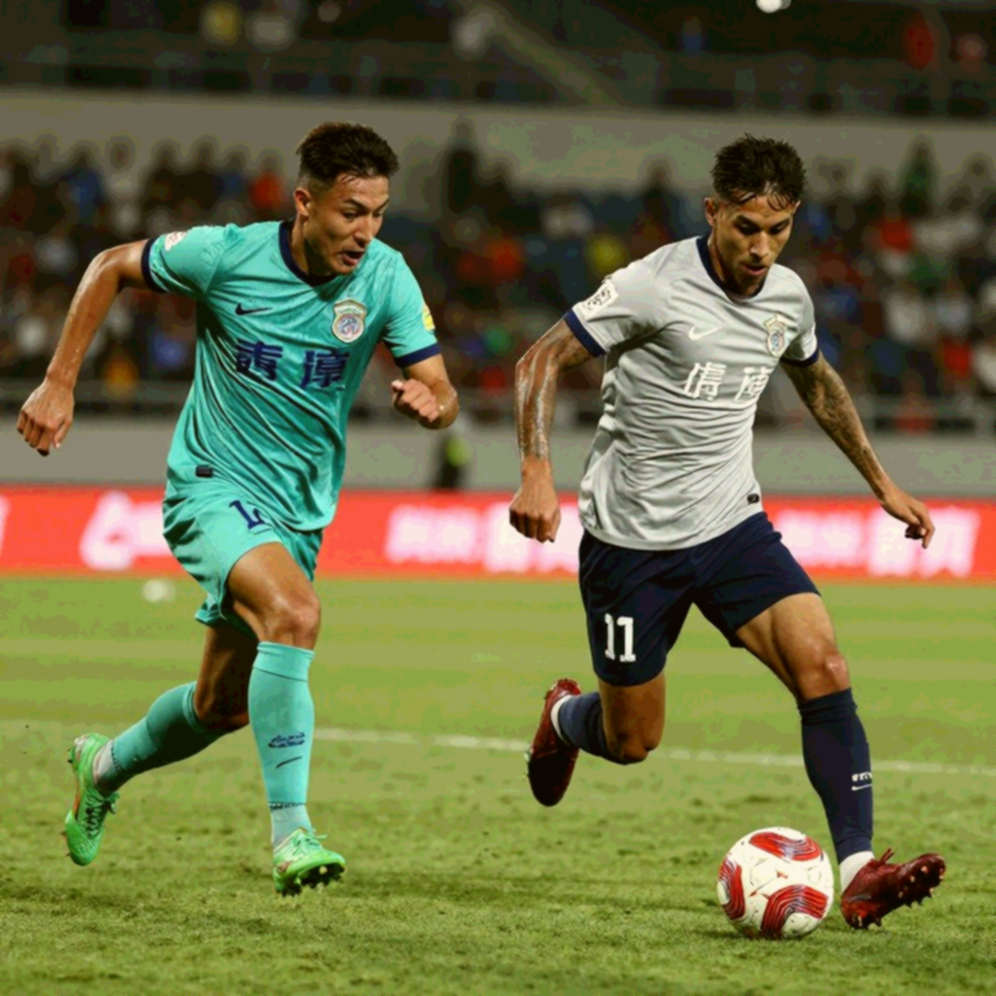
Numbers narrate what has passed. The dressing room narrates what comes next.
I have sat through many press conferences of this kind in the K League, and the lesson is always the same: the headline sits in the last sentence, the real information sits in the first. Here, the first sentence is about fitness. A coach who talks about fitness before facing a stronger opponent is usually preparing for a match in which he will not control the ball. He needs runners, not creators.
Based on my experience covering matches across Asia and Europe, newly promoted teams tend to choose one of two paths. The first is to play their own identity and accept the risk. The second is to drop the block, concede territory and look for chances in transition. The report does not say which path Montella picked. But the emphasis on fighting, on deserving, on fitness leans toward the second.
Early season: the real variable of a ten-day window
The remark about the beginning of the season is the most important sentence in the entire report, and it is buried beneath the headline. In September, players arrive at national camp in wildly different physical states. Some have played six or seven matches. Some are returning from injury. Some have just changed clubs and have not started a single game.
In those conditions, a national-team coach's selection is shaped by medical reports more than by philosophy. That explains why Montella refuses to commit to names and commits only to criteria. He is keeping the starting eleven open until he knows exactly who among his players can run for ninety minutes.
At the analytical level, this is the largest blind spot in the story. Nobody can assess Turkey's true strength across these two matches without knowing who trained fully and who only did recovery work. Pre-match models built on squad market value become close to meaningless while the fitness variable remains unresolved.
I have seen this at a smaller scale. In March 2026, while covering Busan IPark in K League 2, I watched the home side lead Suwon FC 2-0 and then lose 2-3. I rewatched the footage more than three times and found the back line had dropped 11.4 metres deeper than in the first half after the 75th minute. Two rounds later, the late collapse repeated. The problem was not the tactics. The problem was the legs.
Busan taught me that silent observation says more than shouting.
Two home matches and the logic of home points
In a group containing France and Italy, the points available away from home are usually scarce. That makes the two home fixtures the entire foundation of the campaign. Four points from those matches would put Turkey in a safe position for the rest of the schedule. Two defeats would shift the pressure from the technical to the personal, and the first person to absorb it is always the head coach.
Montella's "start well and finish well" sounds like a comment about mentality. In football, it also describes a load-management plan: seize the initiative early, then keep the physical cost as low as possible for the second match. With two major opponents in a single window, the team that spends extra emotional energy in the first game usually pays for it in the second.
One point deserves emphasis. Home advantage in Turkey is a cultural variable, not merely a geographical one. The crowd can lift the home team's energy for the first thirty minutes while simultaneously raising the risk of losing composure after conceding. For a side playing its first matches at this level, that variable can cut both ways.
The France memory: psychological capital and the trap inside it
Turkey is unbeaten in its last two meetings with France. Any analysis department would put that fact on the board before kick-off. Its effect is clear: it breaks the opponent's sense of invincibility and gives Turkey an anchor point.
There is a trap, though. Those matches were played in 2026, in a different competitive setting, with different squads and different objectives. When a newly promoted team leans on old memories, it can enter the fixture with a distorted picture of the current gap. If France scores in the tenth minute, the anchor can turn into a burden.
More telling is that Montella never mentions those two matches in the quoted remarks. He talks about merit, fitness and fighting. That is the choice of a coach who understands that memory is only useful when it does not substitute for preparation.
The transmission line: image, player value, prize money
Turkey's arrival in Nations League A has three observable consequences, even though the report offers no figures. First, the number of high-quality matches for the national team increases, which means Turkish players are seen more often on the international stage. Second, the commercial and media value of the national team rises with the tier. Third, it is an ideal environment for scouts from bigger clubs to refresh their assessments of Turkish players.
The transmission mechanism is concrete. A defender who performs well against France for ninety minutes can change his position on a major club's tracking list. A midfielder who holds the tempo against Italy can raise his transfer value in the next window. For promoted national teams, this benefit often outweighs the result itself.
For the federation, competing in the top tier means more distribution income from UEFA and greater appeal to sponsors. The report provides no numbers, so any specific estimate is speculation. The direction of the money, however, is clear: promotion pays more, and more money allows more investment in youth development, where Turkey has a long tradition of producing technical midfielders.
The contrarian angle: someone will call this empty talk
The most common reading of this story will be: a coach talking big before a beating. There is a second version, less noticed and, I believe, more accurate: Montella is managing expectations before the match is played.
Look again at the structure of the message. He says fitness is not perfect. He says it is early in the season. He says places must be earned. He says fight until the last drop of sweat. That is a set of evaluation criteria independent of the scoreline. If Turkey loses to France, observers can still measure whether this team fought, whether it deserved its place. This is classic communications management: shift the yardstick from result to effort at the exact moment the result is least controllable.
An analysis mocked in 2026 is now teaching material. I do not need them to remember my name.
But the technique has a downside. If the yardstick is effort, a performance lacking effort costs far more than a defeat caused by a quality gap. A team that loses because the opponent is better has no internal problem. A team accused of not fighting does. Montella has set a standard he now has to live with.
There is one more counterintuitive point about merit-based selection. At club level, competition for places has a whole season to settle. At national level, there are ten days. A lineup that changes heavily between two matches loses the automatic coordination that certain zones require: set-piece defending, midfield screening, deep build-up. Meritocracy, applied too rigidly, can become a tactical cost.
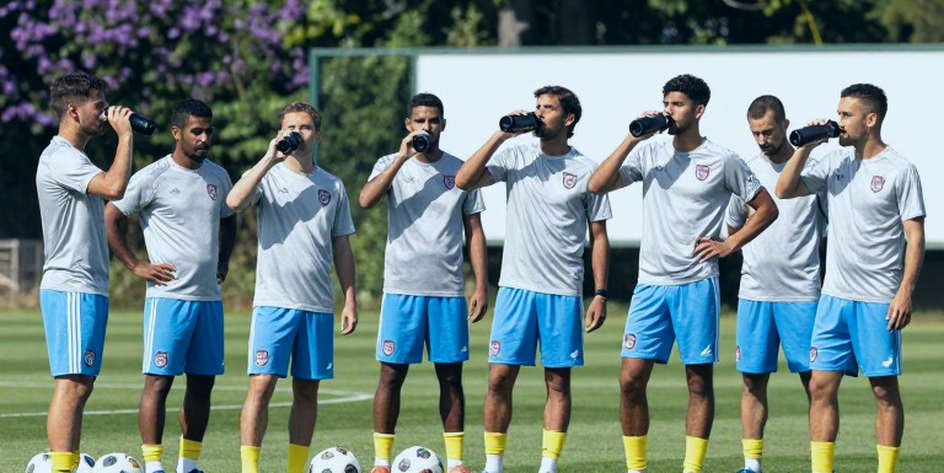
And one more note on the source. This is a report built on direct quotes in a national newspaper, placing it at medium reliability. It has value because the speaker is the head coach, but it contains no independent verification, no match data and no tactical context. They called me crazy. The match did not. Anyone drawing a tactical blueprint for Turkey from this report is drawing in the air.
The media cycle: short, steep and dependent on one match
This story has the shape of a short news cycle. It heats up during the pre-match build-up, peaks around the France fixture, and will end or change direction entirely after the Italy match. It lacks the data depth to become a long-running narrative, because the source itself supplies no performance metrics.
The pressure on Montella sits at a medium level. He has a historic milestone to defend himself with, and he used it in his opening line. But a milestone only protects a coach once. If the two home matches pass without any sign of competitiveness, Turkish public opinion will shift from expectation to interrogation, and the question will be about the pathway rather than the spirit.
For the players, the pressure takes a different shape. This is a window in which every touch is recorded and circulated. For a young player, one good match against France can change a season. One bad match can put a club starting place at risk. That rule is asymmetric, and players feel the asymmetry before any journalist writes about it.
What to watch next
The squad list and medical updates are the first observation point. If several key players are absent or limited to recovery work, any assessment of Turkey's capacity at this level should be postponed.
The starting eleven against France is the second, and it will show how far the merit policy is really applied. Surprise inclusions or omissions in a lineup are usually the clearest signal of the dressing-room hierarchy.
The result against France is the third, but not merely the scoreline. What matters is how Turkey responds after conceding, because that is when the statement about spirit is genuinely tested.
The final observation point is the media reaction in the two days after the second match. If the language shifts from "deserving" to "needs change", the cycle has closed in the way no coach wants.
What I take from this story is not whether Turkey beats France. It is that a team which has just completed its promotion climb chose to enter the dressing room with fitness first and dignity second. How a team talks about itself during its first ten days at the top level is usually a more accurate predictor of the road ahead than any scoreboard. When the final whistle goes, people will remember the score. The pulse in the tunnel is heard only by those who are there.